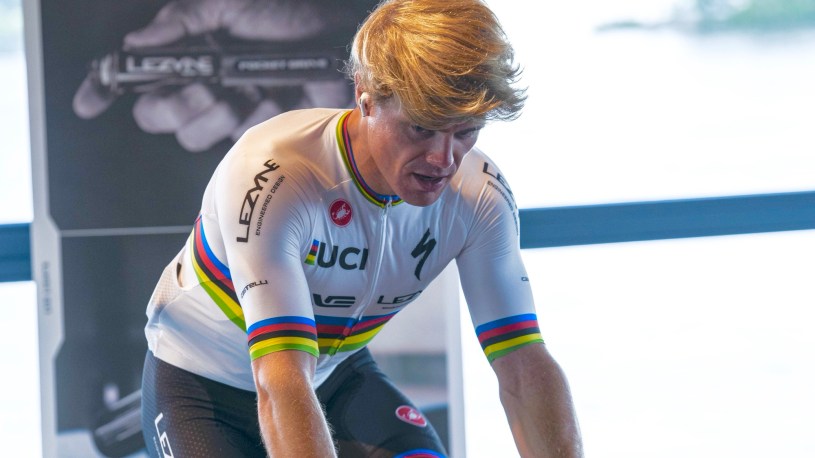
After winning his third UCI Cycling Esports World Championship title in mid-November, Jason Osborne believes the online sport has a bright future, but he also has suspicions and warns that some virtual race competitors are doping with performance enhancing drugs.
In an interview with Domestique, without naming names or providing data, the 31 year-old German and former WorldTour pro said, “We have seen [Esports] riders come out of nowhere with no road background who can suddenly match the best in the world, win prize money and then disappear.”
Adding, “That is very rare in other sports. It underlines why more robust testing is essential. Honest athletes should not lose out because the structures are not strong enough.”
Osborne would like Esports riders to be part of the the same year-round anti-doping testing program (i.e. Registered Testing Pool) used with WorldTour, ProTour, Continental and some amateur level racers worldwide.
“There is huge potential in Esports, but if the sport wants to be taken seriously the top athletes need to be in the test pool all year round,” he said.
He goes on to explain, “Esports has open [to anyone] qualifiers which is fantastic for accessibility, but it also means most riders are not subject to any anti-doping controls until they reach the in-person finals. That creates an imbalance.”
His thoughts are not without merit, in 2023 elite Italian Esports racer Luca Zanesca, who finished 57th at the UCI Cycling Esports World Championship and 17th in the MyWhoosh $1,000,000 Championship, was banned 3 years after a real world test carried out by the Italian National Anti-Doping Organization returned a positive result for the anabolic-androgenic steroid drug Stanozolol.
With some freelance esports bike racers reportedly earning well over $100,000 USD per year, Osborne believes the fight to keep doping out of the sport is no longer an option if Esports cycling wants to be taken seriously.
Photo Credit: Lezyne
© 2019-2025 All Rights Reserved Gran Fondo Daily
 GRAN FONDO DAILY